Monday, 30 May 2011

Hijacking...


I don't know whether it's funny or depressing the way Adrian Fortescue is hijacked by the Traditionalists. They seem to think that if he were alive today, he'd be one of them! My view is that had he lived to see the pontificate of Pius XII, and the dread year 1956, he'd have gone into open schism with Rome, and perhaps taken his congregation with him. Already 40 years before the unfortunate pontificate of that Man Fortescue complained bitterly of the Roman Curia, Ultramontanism (seen most clearly in his rejection of the Oath against Modernity, which he refused to swear, and the imposition of Italianate Latin on the Roman Church), and the ''Italian lunatic'' he so clearly despised. Are these the characteristics of an Ultramontane Traddie, ready to blindly obey everything Rome decrees?


Adrian Fortescue was a great man, and if ''traditionalist'' at all one of the proto-Traditionalists akin to Evelyn Waugh or J.R.R Tolkien, with a more holistic understanding of Tradition and a surpassing knowledge of Church history and liturgy. Fortescue had a sober affection for the Church of Rome, after the manner of the Fathers of the Church, such as St Irenaeus, not some nauseating sycophantic fixation. Would Fortescue welcome the new translation? Would he accept Summorum Pontificum? As a man who loved and lived the Roman Liturgy greatly and reverently I don't suppose he'd have been at all satisfied with mediocrity and might-have-beens...


No, I'd say Fortescue would be more like me. A friend of mine opined that had he not left the Roman Church he'd quite happily celebrate the Novus Ordo and repudiate the Traditionalists. While I do not agree entirely with this, I can see him doing this more than I can his celebrating a Low Mass using a 1962 Missal and leading ill-informed devotions at a side altar at 8 o'clock in the evening...

Saturday, 28 May 2011

Truth, constancy and relativism...


Don't you just hate it when, in discourse with, say, an atheist, you utter a truism such as ''God exists,'' and they reply with something to the effect of ''yes, but only to you.'' What is wrong with this answer? It is precisely that by implication truth is seen as something individualistic or even solipsist, existing not of itself and having a quality independant of human reason and opinion, but solely in the fallible minds of men, which soon wither and make mistakes. The only ultimate logical consequence of adhering to this serious blunder in the human faculty of understanding is that religion has nothing to teach us which is in any way meaningful or needful for us to know since we can all make up our own minds about morality, revelation, the ordering of our lives according to a purpose far greater than us, and even the very existence of God. But this is not so, and the ''only to you'' mentality is a lie which comes from the Foe of God and men, ordered to the subversion of religion. Truth is not something relative among men and something which shifts in nuance or emphasis from one generation to the next. Truth is something constant and eternal, since it emanates from God.

It is as true a thousand years ago as it is today that Tradition, for the sake of argument, has a quality of Truth measurable in the economy of Salvation quite independant of the Papacy. The Fathers of the ecumenical councils were conscious that they taught nothing new, that is to say, nothing which was not consonant with the Tradition of the Church - this in itself sheds an interesting light on the attitude of the fathers of Chalcedon (A.D 451) who, when assessing the famous Tome of St Leo, were not so much interested in Ubi Petrus, or Roma locuta (she never shuts up!), but whether or not the Tome agreed with the Christology of St Cyril of Alexandria. I say interesting, but I mean demonstrably disconsonant with the later attitude of the Roman Church about particular utterances of the Roman Pontiff ex cathedra. Let us say for the moment that I accept all that the Roman Church teaches about the Pope, and I believe also that Tradition has a special auctoritas independant of the will and whim of the reigning Pope. Would I not have on the one hand to confess that the Pope is guilty of tampering in the Tradition by looking to the contemporary wasteland of Roman Liturgy, and to trace this back to the decrees of 19th and 20th century popes; and on the other to accept (baldly) that the Pope is free to act, according to the ontological Petrine charism founded upon Christ's ordinance in the Gospel, to renew, reform, articulate in a manner more intelligible for modern man, those institutions in the Church subject to him (Liturgy, Doctrine, the decrees of ecumenical councils, etc). Perhaps I have overstepped the mark. The ideal, very attractive, is that the Pope is the guardian of the Divine deposit, the defender of Tradition against innovators, the smasher of heretics. This has at least the semblance of Truth, and I would, in deference to my Patriarch, render obeisance to this truth, if I had not the knowledge and experience that it is all too romantic. Modern day apologists for the Papal claims speak of the limits of the Papacy, oftentimes citing the then Cardinal Ratzinger on the spurious idea of Papal ''despotism.'' Very good, very good indeed - but do they not conveniently miss the entire point? It is the agony of a mind in doubt - clinging to the idea of a sublime Petrine ministry, perfectly convenient in the Church, and the reality which is at stark contrast - that the present authority of the Pope is something which far exceeds the legitimate authority of any bishop, however exalted his office or apostolic his See. It is almost as if the Pope were to say: ''I can trample upon Tradition, but only so much,'' and making an exhibition of his efforts. It is not so much Popes acting upon the mandates of ecumenical councils that I have a problem with, but rather that which goes before; namely, the idea that the Pope has authority enough to teach independant of Liturgy and Tradition. Let me explain.

We all know about the famous infallible pronouncements of 1854 and 1950. The measure of truth inherent in Ineffabilis Deus is beyond the scope of this post, but the implications of the existence of this constitution are relevant. Romans fondly suppose that Ineffabilis Deus was an example of the Pope putting an end to an age-long debate between the Franciscans and the Dominicans about whether or not the Blessed Virgin Mary was conceived without sin. I suppose it was, in the sense that uniformity in doctrine is an ecclesiastical ideal - or is it? My view is that since Man must be redeemed after a manner wholly consonant with his nature, the implications of the new dogma detract somewhat from this, but this is irrelevant. Does unwavering assent to a doctrine not necessary for salvation, based upon the authority of the Pope to define it so, guarantee one's personal orthodoxy? Whether or not the dogma is wholesome is irrelevant to the discussion. What I have issue with is why the Pope decided to replace the old propers for the feast of the Conception of St Mary with new ones - thereby divorcing himself and the rest of the Roman Church with the ancestral Liturgy of this day, and therefore the ancestral impetus for assent to the teaching (or at least a primeval, probably more orthodox, form of it). What really happened afterwards in the south of France, I wonder?

The exact same thing happened in 1950 with the promulgation of Munificentissimus Deus. The doctrine of St Mary's Assumption has a different flavour of orthodoxy compared with the Conception, but the same principle applies. Why did the Pope change the Propers? You want my opinion? I think that in both cases it is not so much about settling disputes over ecclesiastical discipline and orthodoxy but the authority of the Pope to say what he likes. The fact that he changed the propers on both occasions indicates that it is not about Our Lady at all, but about belief in something about St Mary because the Pope said so. What the pope has done is replace Tradition with himself. These are just two examples, and noteworthily the only two ''infallible'' pronouncements of popes in the history of the Church. What Pius XII did to the Sacred Liturgy, upon his own authority and no other, is a matter which would take long as years of torment to tell.

Of course we all of us agree that there is a problem in the Roman Church today; where the Romans and I differ is where we place the blame. That the problem goes much deeper than the 1960s, that it's something inextricably linked up with a huge misinterpretation of Scripture (or whatever else), is something which puts the Traddies out of reckoning. If I say that the Pope is guilty of tampering (and he is), they accuse me of error for thinking so. I'm bored with this now, I have theatre tickets to book, so I shall conclude with an observation that the Roman Church's confessedly heroic stance against doctrinal relativism is a stinking red herring, in the light of all that I have said, since the Pope is himself guilty of the same - by tampering here, emphasizing this there, and all of this in order to accomodate the spurious, ill-defined ''development of doctrine'' - or was this invented to conveniently explain away the want of continuity and tradition in the Roman Church?

And so it all boils down to two things. Either you accept Christ, and take the consequences, or you do not, and take the consequences. Maybe one day I shall again bend the knee to Rome, but something drastic will have to happen first. There are just two possibilities - either the claims of the Pope are true, and therefore it is necessary to be subject to him; or they are a damnable falsehood inimical to the Gospel. The Book of Ecclesiasticus puts it succinctly: He has set water and fire before you: stretch forth your hand to which you will (15:17). There is no ''only to you'' about it; either I am in error for rejecting the Pope, or I have, by God's Grace, been set at liberty by rejecting him. Lord grant that I have chosen rightly...

Friday, 27 May 2011

Bede's World...


Today, readers in Christ, is the feast of St Bede the Venerable (A.D 672-735), the most worthy saint of this country and the only English (his name is not of Saxon derivation) ''Doctor of the Church.'' His personal piety, wisdom, exegesis of the Scriptures and contribution to the history of this country were so great that there has seldom been anyone who could match him; I have found his commentaries on the Scriptures to be exceeding eloquent in good Latinity and more coherent even than St Augustine's. He is one of the Patron saints of this blog, and I daresay a personal intercessor (having saved me from several close encounters of an unspeakable kind). Unfortunately this is the third consecuative year that I haven't been to Durham Cathedral to venerate his tomb (wouldn't life be dull without such godly pieties as the veneration of the saints?), circumstances and want of money mostly, but St Bede himself was hardly well-travelled, having spent his whole life in Jarrow. St Bede himself says (my own translation):

I was born on the lands about this monastery, and when I was just seven years old I was placed by my family into the care of the most reverend Abbot Benedict [Biscop], and later that of Abbot Ceolfrith, for my education. Since then I have passed all my life in this monastery, meditating upon the Scriptures, and among the disciplines of following the Rule, and the care of daily singing in church, it has always been my delight to teach, or to learn or to write. (Ecclesiastical History, Book V, Chapter XXIV).


St Bede died in splendour, piety, and in the fear of the Lord, surrounded by the monks whom he loved. St Cuthbert recorded afterwards:


Tempus est, si sic Factori meo videtur, ut ad eum modo resolatus e carne veniam, qui me quando non eram ex nihilo formavit. Multum tempus vixi, beneque mihi pius Iudex vitam meam praevidit. Tempus vero absolutionis meae prope est, etenim anima mea desiderat Regem meum Christum in decore suo videre. (It is time, if it seems so to my Maker, that released from the flesh I should come to Him, who when I was not formed me out of nothing. I have lived much, and the pious Judge has provided well for me all my life. In truth the time of my absolution is near, and indeed my soul longs to see Christ my King in all His beauty. St Cuthbert's Epistle on the Death of St Bede).

Isn't it lovely? Reminds me of the first antiphon at First Vespers of the Nativity (which St Bede will undoubtedly have known by heart; holymen of this age had a remarkable ability to remember whole psalms etc); Rex pacificus magnificatus est, cuius vultum desiderat universa terra. It is the sort of literature, reminiscent almost of Tolkien, which moves me deeply - a very apposite word here. Ecclesiastical literature of this sort, the sacred texts of the Liturgy sung to the traditional plainsong melodies, even the latter writings of godly men like Tolkien, have a power over the hearts of those sensitive to Truth and who hunger for righteousness. It is the Grace of God which dictates and pervades over them, which is why they move us. Taste and temperament do not enter into it. It is as though the hand of God reaches into one's soul, that one's entire mind and purpose is uplifted to the heights. Personally, if I am moved even to tears by Liturgy or such literature, I am not sure if they are tears of gladness at all, or something deeper. The soul is fathomless and immortal after all, and perhaps we can become dimly aware, even in this life, of depths of the soul which surpass human emotion. Perhaps human emotion is lost in the pure Grace of God when it so moves us......well this has become garbled so I shall stop. Beauty for beauty's sake is a good thing. Ugliness, iconoclasm and Bible-in-basic-English are the Protestant vices of your average modern RC.


As an interesting note, St Cuthbert's Epistle is interesting from a liturgical perspective. He says: ''...at nine o'clock we went in procession with the relics, as the custom of that day required.'' Surely this indicates that the community at Jarrow were following the Gallican custom of Rogation processions on the feriae preceeding Ascension Day? If so it is an interesting window into the liturgical life of the pre-Conquest Anglican Church, since the Rogations were not then observed in Rome.


St Bede, pray for us. The painting, which I have put up before, depicts the Death of St Bede. Notice that the monks are wearing the traditional surplice over their cowls.

Sunday, 22 May 2011

One year on...


Liturgiae Causa is one year old today. I wish to thank everyone for taking the time to read my posts, and especially those of you who have paid me the compliment of at least taking me seriously.


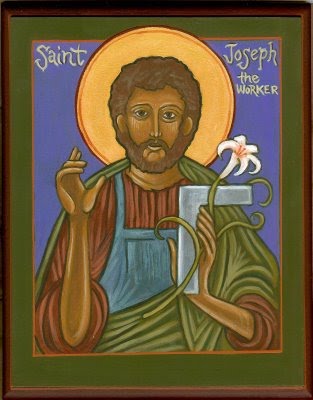
The blog was in embryonic form at Singulare Ingenium, my old Tolkien blog (which I started two years ago). Gradually, as I studied the history of the Papacy and the Liturgy in more depth, I decided to focus more and more on the Sacred Liturgy and the failure of the Traditionalist movement to properly cultivate a proper liturgical mindset in the Church. What really got it started was ruminating over the pseudo-feast of Joe the Worker and having to sit in absolute wrath in choir at a First Holy Communion liturgy in my old parish as the new, less than worthy propers were being chanted to a hideous melody. And so on Pentecost last year I decided to relaunch as a Catholic blogger in order to offer a more variegated and holistic view of Tradition, distinct from Ultramontane tendencies, the lace cotta, and fortified by Grace in the correct way of making the Sign of the Cross. I hope that amidst the endless bitterness and rambling I have got some coherent points across. That is that, like women and seamen, Tradition and Traddies don't mix.


The painting, which depicts Christ and the two disciples on the road to Emmaus, is significant in the understanding of this blog. Were not the disciples profoundly moved as Christ expounded to them the Scriptures? Were their eyes not opened to Him in the breaking of bread? It is precisely that Liturgy is the greatest link, like unto a chain, to the past, to the primeval liturgy at which Christ Himself was celebrant in the flesh, that disruption and tampering is to be eschewed by all who love Truth and godliness in the Church above the surpassing claims of popes and their whims. Are we not forgetful of Tradition, the Truth which sets us at liberty, and fundamentally Christ Himself, when the waking memory of the Church, which is Tradition (manifestly, namely also, the Liturgy), is disrupted when popes and their ilk (even the clergy and laity at local level, afflicted with the anti-liturgical heresy) take it upon themselves to interrupt the Tradition by the assaults of aggiornamento and such things? I personally fail to see how Tradition can be properly appreciated and loved when the Pope takes its place. ''Lest we forget'' is a term we ought all to remember, and not just about the dead which die in the Lord.


Anyway I hope that I haven't upset too many people. I hope also to keep blogging as often as I may. Certainly this year the quality of posts has declined, and perhaps this has something to do (perhaps a lot to do) with the spiritual wilderness I am currently trying to get out of without compromising my convictions. May God grant me the grace and patience to write more academically and dispassionately, and in the spirit of charity towards men, even the enemies of Tradition. Perhaps the next time I sit down to write, anything, I shall ask myself whether what I am about to write will make the world a better place; or something. God for His mercy give Grace!

Saturday, 21 May 2011

Hobbit sense...


I am delighted that Fr Hunwicke has resumed blogging. I have always enjoyed his blog, full of wit and erudition; the work of a discerning mind and a sharp eye. For long he was one of few blogs worth reading; but I must express my sadness at the tone and quality of many of his latest posts. I daresay that the closer he has moved towards Rome the worse things have gotten (to be Hobbitonian) over at Liturgical Notes. He has declined from the virtues of Anglo-Catholicism to the vices and hackneyed Pope Benedict this, Usus Antiquior that of Traddieland. He has become a RC Traditionalist. Almost I feel as Treebeard did when thinking of the fall of Saruman, a wizard should know better, he does know better, and all that...It doesn't do to be too starry-eyed about Mother Rome, does it? After all, it was Mother Rome that caused all the problems of 20th century liturgy. I am not content to blame scapegoats like Bugnini, who was but a servant or emissary. It was by the exercise of authority, far exceeding the legitimate limits of the Petrine ministry, that the Novus Ordo was ultimately created, and its senior, uglier, sister, the rite of 1962. Essentially by decrees and encyclicals such as Divino Afflatu (now in its centenary), Mediator Dei (1947), Maxima Redemptionis (1955), and Missale Romanum (1969), the Pope established himself master and arbiter of the Sacred Liturgy, and the dispenser of all liturgical law, notwithstanding custom, orthopraxis and the Tradition of our Fathers. This anti-liturgical and anti-traditional mentality, so entrenched in the Papal system as to go unnoticed or explained away by the Traditionalists (or worse, even to be seen as something God-given and necessary in the exercise of Petrine authority; and in defence are invoked previous popes from the history of the Church, such as St Gregory, who organised the Canon Romanus into its present form), is at the heart of the problem, and modern attempts by the Holy See to put the genie back in the lamp (seeing the desolation of their contemporary Liturgy) simply perpetuate the same problem; centralization and meddling, the undermining of episcopal authority over the Liturgy in their own dioceses, etc. I daresay that ineptitude and might-have-beens are the hallmark of the contemporary Roman Church, with millions of aliturgical Roman Catholics and a new translation of an impoverished Missal (which reads much like the bulletin I get every Monday morning at work) as the ultimate legacy of 60 years of Papal misuse of authority.


Does it really matter what the last sentence of Universae Ecclesiae said? It's this kind of Ultramontanism, this legal positivism, which I find so repugnant about modern Roman Catholicism. How can you seriously extricate yourself from an evident liturgical crisis by looking to the same old response, the same old authority, that made up the problem in the first place? It just seems sycophantic, romantic and foolish. Do I have any answers? No, and it's not as if anyone would look here for them.


Who am I to judge, though? I venture to add that the further away from Rome that I have gone, from eccentric Traddie to renegade, looking towards Rome as an ancient home which has since become the abode of dragons, the worse things have gotten here at Liturgiae Causa. This blog is one year old tomorrow. I wonder where I shall be one year from now? Lord grant that I come into that church which is most pleasing to Him. I shall, however, continue to pray for Fr Hunwicke; that he may grow some more Hobbit sense (Hobbits aren't Ultramontane, and even after Aragorn ascended as the new ''holy Roman emperor,'' as it were, none of them fawned over him like Ultramontane types fawn over the pope). As Hamfast (''stay-at-home'') Gamgee might say: ''There's no use joining that Roman church, folk in that church are queer!''

Wednesday, 18 May 2011

Update...

Arthur's Requiem Mass (no Office I'm afraid) will be on Friday at 10:30am at St Margaret's Convent Chapel, 23 Bethell Road, London E13. Burial will be at St Patrick's Catholic cemetery, Langthorne Road, Leytonstone, E11 4HL.

More information can be obtained here.

I can't go I'm afraid, much as I'd have liked to, as I am under a lot of pressure at work, have a host of deadlines to meet before Friday and we are short staffed. This may sound selfish but why could the funeral not be on Saturday? It is most inconvenient. Most people work during the week, and even if I could have had the day off, my black suit needs to be dry cleaned and I have no money to have it done...until Friday!

Another Update: I have just been informed that Arthur is not in fact being buried, as is the decent Christian tradition, but is being cremated instead - just as well that I can't go then. Far be it from me to pass judgement upon his family at this time but that is not a good show. Cremation is an abominable pagan practice which destroys belief in the general Resurrection. The human body is the temple of the Holy Ghost and does not lose intrinsic worth after death, something to be discarded or burned as the heathens would. Did the holy women give up the body of Our Lord to be burned after death? No, they went to the tomb to prepare the body, and with reverence anoint the Lord. The worship of Mammon springs to mind here, as it did when 10 years ago my grandfather was cremated - against his wishes - just to save a few bob; and it's not as if my grandmother is poor. I am sure this is not what Arthur would want. Lord grant that the LMS do their part worthily. No comment on that front, I've said enough...

Saturday, 7 May 2011

Arthur...


I was grieved to learn moments ago of the passing of Mr Arthur Crumly, former principal Master of Ceremonies for the Latin Mass Society of England and Wales. I met him a few times at Spanish Place and was first introduced to him by someone in my old parish. I say grieved but it is perhaps something else than that. Perhaps the poignant feeling one gets when one reads of something that changes the world, certainly giving one perspective. Truly my heart goes out to his friends, relatives and other loved ones in sympathy at this time.


In the past week I have given very serious thought to how this blog has degenerated into petty squabbling and nastiness, which is not and never was the raison d'être of my endeavour here. My convictions have not changed though I feel compelled to humbly beg the forgiveness of those whom I have offended in the impetuosity of my anger and frustration in many of my posts. This blog was started in order to shed a new light on the Traditionalist movement and to demonstrate how, in sundry ways, the Church in the West has failed over the centuries to cultivate the liturgical tradition by the cancers of Ultramontanism and the Roman obsession with completeness and legalism. To utter a cliché Mr Crumly's death is in a certain sense the ''end of an era.'' Maybe it's time for me to move on and to remember that all men, whatever their disposition, shall fare alike on the Day of Judgement. I shall certainly pray for the repose of Mr Crumly's soul. I would be grateful if anyone informs me of his funeral arrangements. Please forgive this halting note.


I am the resurrection and the life, saith the Lord: he that believeth in me, though he were dead, yet shall he live: and whosoever liveth and believeth in me shall never die.


I know that my Redeemer liveth, and that he shall stand at the latter day upon the earth. And though after my skin worms destroy this body, yet in my flesh shall I see God: whom I shall see for myself, and mine eyes shall behold, and not another.


Thou knowest, Lord, the secrets of our hearts; shut not thy merciful ears to our prayer; but spare us, Lord most holy, O God most mighty, O holy and merciful Saviour, thou most worthy judge eternal, suffer us not, at our last hour, for any pains of death, to fall from thee.


I heard a voice from heaven, saying unto me, Write, From henceforth blessed are the dead which die in the Lord: even so saith the Spirit: for they rest from their labours.


Requiem aeternam dona ei Domine et lux perpetua luceat ei. Requiescat in pace. Amen.

Monday, 2 May 2011

Saints and Anathemas...


Today, in England, is the festival of St George, our (novel) patron. To be honest I'm not enthusiastic about foreign saints, particularly if they supersede an old English one. St Edward the Confessor is the true (and traditional) patron saint of this country, and the Royal Family, and his feast day is not until October. Therefore I am celebrating the traditional feast of the holy Apostles Philip and James instead. For an erudite account of what happened to this feast in 1956, see here.


And now we come to a matter which touches me very near. You see one of the reasons I started blogging again is because the nasty little Traddie elite in one of many so-called ''traditionalist'' parishes, this time last year, decided (against my counsel) not to celebrate the traditional feast of Sts Philip and James on its proper day (as indicated in the St Lawrence Press Ordo) but the novel pseudo-feast of ''St Joseph the Worker,'' or aptly named in Italian San Giuseppe Comunista, invented by pope Pacelli in the 1950s (the golden age of Trad Catholicism) in deference to communism, because, I was told, ''the people have a devotion to St Joseph.'' Oh it was awful. Expecting Miranda and I was greeted by Caliban! I turned up to serve the first Saturday of the month Sung Mass, expecting red vestments and a decent Sung Mass in honour of the holy Apostles whose feast has been on this day since the first Millennium (and is even so in the Book of Common Prayer kalendar of saints), and the Traddies decided to put on a farce of Ultramontane crap. I only stayed because it was the First Holy Communion Mass of two friends of mine; otherwise I'd have departed in wrath (and probably shaken the dust from my feet). Listening to the strange plainchant of the new propers I was seething and took it upon myself to expose Traddieland for what it is. I mean, it is rather nauseating having to see on other blogs sycophantic nonsense such as ''oh what lovely lace father,'' ''oh how traditional, lovely Roman cut vestments and six candlesticks,'' extraordinary forms and mutual enrichment, and blah blah blah...


If anyone in their insolence would supplant the traditional feast of the holy Apostles Philip and James and celebrate the pseudo-feast of Joe Communist because of Ultramontanism and pastoral expediency, let him be anathema.


If anyone even names ''St Joseph the Worker'' in honour, let him be anathema.


If anyone disagrees with me on this point, let him be anathema.

Saturday, 30 April 2011

Beati et Sancti Dei?


It seems that John Paul II, the old pope of Rome, is to be beatified this weekend. Is this the same chap who kissed the Qu'ran? The same whose liturgical decorum was such that his Masses not only in St Peter's pagan basilica in Rome but also abroad (don't I remember them!) were full of postcommunion dancers, millions of communicants and other riff raff? Well he was an actor in his youth, and perhaps waving to screaming crowds of starry-eyed Papists was more important to this man than the traditional Liturgy - but did Liturgy ever really matter to the Popes? Maybe it did to the old Bishops of Rome in the deeps of time before the prestige of their office as primus inter pares (inter, not super) of the bishops went to their heads and they started inventing myths about Tu es Petrus and personal infallibility under the blanket of the so-called ''development of doctrine.'' How the Roman Church has fallen low! I can't wait until they canonize Old Pacelli - that, I think, will be the final nail in the coffin of the Roman church's once legitimate claim to safeguard the Tradition of the Church.


The above photo adequately demonstrates my point. Methinks it is a growing tendency in the Roman church to canonize bad popes in order to render their actions above reproach. I mean exactly why is this man being canonized? Is the Vatican giving into shouts of santo subito in St Peter's Square? Is it his (confessedly heroic) stance on doctrinal relativism? Or the liturgical impropriety so characteristic of his reign? Maybe he was just a nice man whom everyone liked. Who knows...

Friday, 29 April 2011

Well he does live in Brighton...

There's nothing more pathetic than the hubris of a rancid old Popish queen. I would say I was surprised and shocked but I wasn't really, given his past comments about the Queen of Spain. And no I do not have any qualms about criticizing the clergy - I speak my mind and I am certainly no sycophant. This man is completely aliturgical, Ultramontane (his contempt for his own bishop is notorious) and has no mastery of the Latin language - typical of a Roman Traditionalist and twice as conceited.

The Royal Wedding...


I offer my heartfelt congratulations to the newly-wed Duke and Duchess of Cambridge. It is very catholic and godly to greatly reverence the Royal Family; like the Tradition of the Church, they are a fundamental connexion to God, and a symbol of the national Christian tradition. You cannot be a good Catholic and support pure democracy in my very humble opinion; democracy is simply the exaltation of oligarchical despotism and authority which comes not from God and by no means mirrors the authority of God in Heaven. If the King is a despot, at least there's only one of him. Nevertheless it is a great day to be English (though not ''British''), and to be Irish. A plague upon enemies of the Crown!


Fabulous dress too...

Sunday, 24 April 2011

Christos anesti...


I wish you all a very happy Easter! I am just back from assisting at a quiet Triduum in the back of beyond - all according to the rites of the Church as they were before 1956, and at the correct times. I went up with a friend on Wednesday evening and came back today after Mass of the Lord's Resurrection. We tried to do as much as we could as resources and only four people (including Celebrant) would allow. On Maundy Thursday we chanted None before Mass of the Lord's Supper (at 9:00am...yes that's right - in the morning!), essentially a ''low'' Mass with two servers (MC and thurifer), incense and the Proper prayers and Ordinary sung, either according to the plainsong melodies in the Gradual or monotoned where this was impractical. No Mandatum of course (for practical reasons, and even if we had thirteen poor men none of us would be so impertinent as to insert the Mandatum into the rite of the Mass, as only an aliturgical Modernist with no intelligence would). Afterwards we watched at the Altar of Repose and then went to break our fast with Thai food (whilst poor Traddies were still fasting I expect! Oh no wait, Pius XII did away with the Midnight Eucharistic fast to better accomodate the aberration that is evening Mass!) At 5:00pm we chanted Tenebrae of Good Friday, using the pre-Peasant psalmody and we did not, unlike so-called ''traditionalists,'' omit the Miserere. We did not have a hearse (or even candelabrae) and so it was my counsel that we use a table, veiled in violet, and use fourteen tea lights and a central candlestick. Not ideal but we only had enough unbleached candles for the High Altar and certainly not enough ordinary candles or candlesticks to go around. I'm sure the Almighty thought more of our effort at liturgical orthodoxy than anything aesthetically ''impressive'' provided by most churches and cathedrals though.


Yours truly vested in cassock, surplice and biretta about to chant Tenebrae of Good Friday. Some people accuse me of ''extremism'' for ranting about the surplice and evening Mass - the way I see it, I simply go to church expecting the real thing and, well, if nobody else gets it right you have to do it yourself.


Good Friday morning came (if I'm honest, I hate Good Friday) and we made our way to the church. Our Celebrant was late, due to public transport, and so we had not the time to chant None as we had planned and so just got on with the Mass of the Pre-Hallowed Gifts. My plan for the Passion according to St John was to be Chronista (although I must confess I only know the Mattins tone for the post-Peasant version - something to work on for next year) let the Celebrant do Christus and the others to provide the Synagoga/Turba parts but it was the desire of the Celebrant to simply read the Passion at the Epistle corner, as per the directions of the Memoriale Rituum - although the latter part, beginning at Post haec autem rogavit, was chanted according to the ancient tone, ironically restored (I think) by Pius X. Again, ''low'' ceremonial, with two servers, but sung for the most part (by us and the Celebrant), and with incense where it was required. Nobody communicated of course. I had thought of composing a long tract of maledictions or anathemas against '62ists and have the Celebrant interpolate these into the Litanical Prayers, but I had not the time - perhaps next year. Dry toast and water was my plan for Good Friday although we were constrained to march in procession with a host of other Protestants in some sort of ''act of witness,'' and feign interest in their religion afterwards over tea and hot cross buns, scraped over with some sort of ''spread.'' One of the lady ministers present (priest-women send shivers down my spine - they're like nuns in a way, only much worse), from a Protestant sect, looked like a man from afar, though I was wearing my old prescription sunglasses and only realised my mistake when she came to speak with us. I was told in advance to keep my mouth shut and was pretty successful I reckon, though apparently I was seen giving some priest-woman a sideways look. I would say that my contribution to the ecumenical movement was my having been present at all though. As a general rule I do not pray with Protestants (and I'm thinking of extending this rule to RC traditionalists).


At 3:00pm, as Traddieland began their nonsensical and untraditional ''solemn liturgical action,'' we returned to the church to pray the Stations of the Cross, according to the form of St Alphonsus. We sang a verse of the Stabat Mater (in Latin) between each station (my idea) and chanted Tenebrae of Holy Saturday afterwards (wonderfully, or woefully, short).


Holy Saturday morning came, warm and with omens of joy. Holy Saturday is the hardest of the three days, but the most interesting of the Triduum; one of only two ''penitential'' days left in the liturgical year where the Mass begins with a Litany, as many did of old. Pictured here is the Reed, adorned with flowers from the Altar of Repose. We were fortunate to be joined on this day by a man who was wont to go to Durham years ago for Dr Glover's Triduum, and so we had the beautiful Tracts of the twelve (not four, as in the appalling '62 rite) Prophecies sung according to the melodies of the Gradual rather than monotoned - I can read plainsong notation, but not very well. We had no font (again, resources...) and so we went straight into the Litany and the first Mass of Easter. It is unspeakably moving to hear the Great Alleluia for the first time in weeks; it reminds me in a strange way of Túrin's silence after the death of Beleg and how his tears were loosed after partaking of the waters of Eithel Ivrin, hallowed by Ulmo in ancient days. After Vespers we went to break our fast and drink lots of wine and gin (I had pink gin, the most civilised of all drinks in my humble opinion). We had planned on chanting Paschal Mattins and Lauds but we were too tired in the end - the Triduum is that much harder with scanty resources and a serious lack of people and so I think we can hardly be blamed. My friend and I recited it when we got in after lunch anyway.


Easter Sunday is upon us and below is the High Altar vested for the greatest of all feasts. The Celebrant intoned and I sang the Vidi Aquam before Mass - again ''low'' in ceremonial (well not really, we didn't really do much kneeling - at any rate kneeling is inappropriate during Paschaltide and on Sundays) but with incense and the proper prayers chanted from the Gradual. After Mass we sang the seasonal Marian anthem and joined the Protestants again for coffee, tea and cakes.


I am very tired now, though I can go to bed tonight safe in the knowledge that what our small church did was right and proper and the rest of the Roman Church (which we anathematize) was wrong - in the Novus Ordo, liturgical books of 1962 and even among the more ''sensible'' ones who tried to get it right by doing ''old'' Holy Week but at the incorrect times - thereby rendering their efforts void of all Grace and propriety. What we did was ''low'' (we can probably manage High Mass next year), due to circumstances, but we sang the lessons, prophecies, tracts, psalms etc and made use of incense - in a sense trying to make the Liturgy as much like it should be done as we possibly could within our means with two servers, a Celebrant and priest in choro. Now I am off to drink more gin and enjoy my Easter supper - I believe I have earned it.